
The Lost Art of Choice: Why Human Curation is the Future of the Streaming Era
We are spending more time searching for stories than experiencing them. Here is why the algorithm is failing us and how we take the power back.
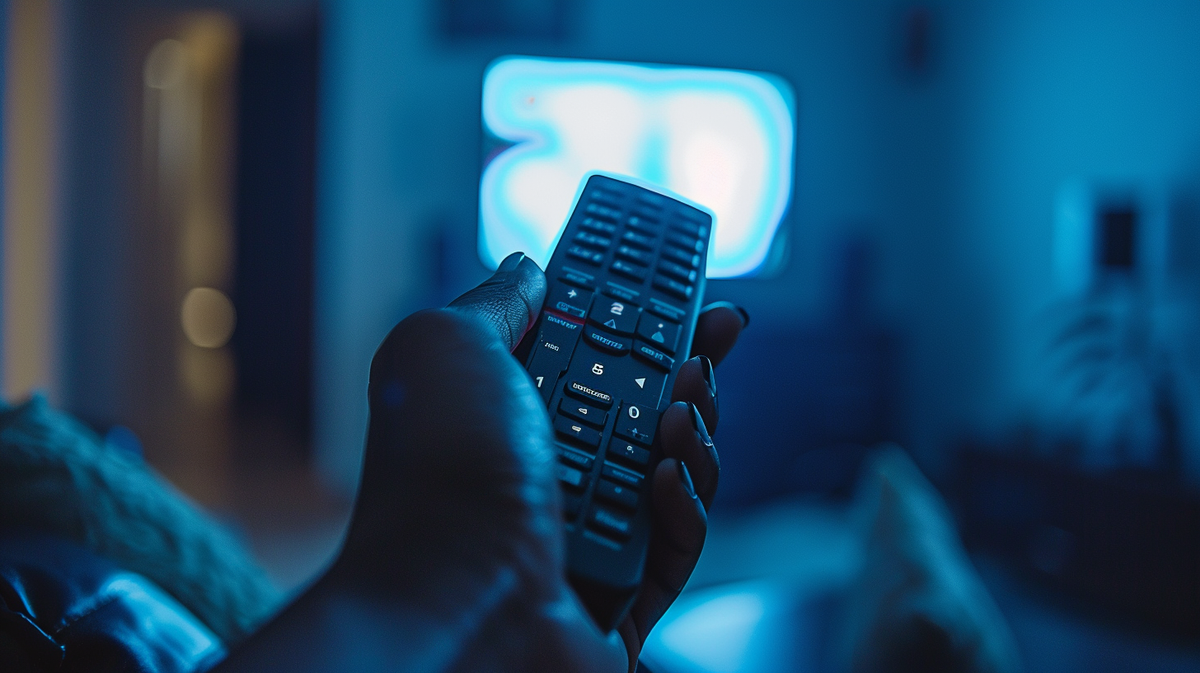
The blue light from the television screen has a specific way of draining the energy out of a living room at midnight. The other night, I sat on my couch for forty-five minutes doing nothing but scrolling through streaming menus. I clicked past hundreds of identical movie thumbnails, skimmed through automated rows of copy-paste category headers, and watched muted previews flash and auto-play against the wall.
By the time I finally settled on a film out of sheer mental fatigue, the initial creative desire was completely gone. I was exhausted before the opening credits even rolled.
We are spending significantly more time searching for stories than actually experiencing them.
This crisis is not born out of a scarcity of content. The digital libraries available to us today are massive, historical, and deeply impressive. We have unprecedented, instantaneous access to the entire history of global cinema right at our fingertips. The real failure is structural: the entertainment industry has successfully built a library of infinite choices, but they have completely taken away the human compass required to navigate it.
The modern viewing experience relies almost entirely on automated predictive math scripts to dictate human taste. If you click on an intense psychological thriller out of pure curiosity on a Tuesday night, your entire interface adapts by the next morning, flooding your feed with formulaic, uninspired look-alikes. The algorithm takes a single, fleeting moment of human curiosity and treats it like a permanent, unchanging identity. It reduces the wild, unpredictable nature of human preference down to a predictable corporate calculation.
To understand why this system fails, we must look at the economic incentives driving algorithmic design. Streaming platforms do not optimize their code to find you a life-changing piece of art; they optimize for platform retention and subscription preservation. The code is financially incentivized to recommend the safest, most uniform content possible to keep your eyes locked on the screen without challenging your habits.
This mechanical predictability inflicts a psychological toll on the viewer, creating decision paralysis and a deep sense of digital fatigue. When we are bombarded by a thousand machine-generated choices engineered merely to occupy our time, our genuine capacity for artistic wonder is replaced by passive consumption.
Defenders of automation often argue that these mathematical models offer unmatched convenience, scaling down millions of global titles into a convenient, personalized feed for the modern consumer. While automation excels at processing sheer volume, it fundamentally confuses data patterns with actual human taste.
An algorithm can track what you watched, but it can never comprehend why a specific narrative moved you, how a musical score haunted you, or why a complex villain arc resonated with your soul. In substituting true discovery with calculated predictability, the machine flattens our relationship with art, grouping timeless cinematic masterpieces and mindless background noise under the exact same generic genre tags.
This is exactly why I built The Unconventional Curator.
This platform is a one-person, completely independent narrative archive designed to act as the human hand on the wheel, steering viewers away from the predictive cycle and back toward genuine narrative substance. Curation is an active art form, not a passive mathematical equation. Instead of relying on metadata tags, this publication uncovers hidden gems through rigorous, structural analysis.
True storytelling transcends national borders, production eras, and original languages. Audiences do not want fewer choices; they want trusted, human-driven direction that actively respects their intelligence. By trading the isolation of the endless scroll for a dedicated, human-led community, we reclaim our relationship with the stories that shape us.
We deserve entertainment that challenges our perspectives and stays with us long after the screen goes dark. This archive exists to ensure those enduring narratives are never lost to the machine, answering your desire for meaningful engagement with unfiltered, uncompromising taste.
Curated by taste, not by algorithm.